

SKPZ
SOZIOKULTURELLES ZENTRUM
AUF DEM RAW-GELANDE BERLIN FRIEDRICHSHAIN
IM SOZIOKULTURELLEN L
AUF DEM RAW-GELANDE BERLIN FRIEDRICHSHAIN
IM SOZIOKULTURELLEN L
SKPZ
SOZIOKULTURELLES ZENTRUM
AUF DEM RAW-GELANDE BERLIN FRIEDRICHSHAIN
IM SOZIOKULTURELLEN L
AUF DEM RAW-GELANDE BERLIN FRIEDRICHSHAIN
IM SOZIOKULTURELLEN L
SKPZ
SOZIOKULTURELLES ZENTRUM
AUF DEM RAW-GELANDE BERLIN FRIEDRICHSHAIN
IM SOZIOKULTURELLEN L
AUF DEM RAW-GELANDE BERLIN FRIEDRICHSHAIN
IM SOZIOKULTURELLEN L
SKPZ
SOZIOKULTURELLES ZENTRUM
AUF DEM RAW-GELANDE BERLIN FRIEDRICHSHAIN
IM SOZIOKULTURELLEN L
AUF DEM RAW-GELANDE BERLIN FRIEDRICHSHAIN
IM SOZIOKULTURELLEN L
SKPZ
SOZIOKULTURELLES ZENTRUM
AUF DEM RAW-GELANDE BERLIN FRIEDRICHSHAIN
IM SOZIOKULTURELLEN L
AUF DEM RAW-GELANDE BERLIN FRIEDRICHSHAIN
IM SOZIOKULTURELLEN L
SKPZ
SOZIOKULTURELLES ZENTRUM
AUF DEM RAW-GELANDE BERLIN FRIEDRICHSHAIN
IM SOZIOKULTURELLEN L
AUF DEM RAW-GELANDE BERLIN FRIEDRICHSHAIN
IM SOZIOKULTURELLEN L
Pressemitteilung
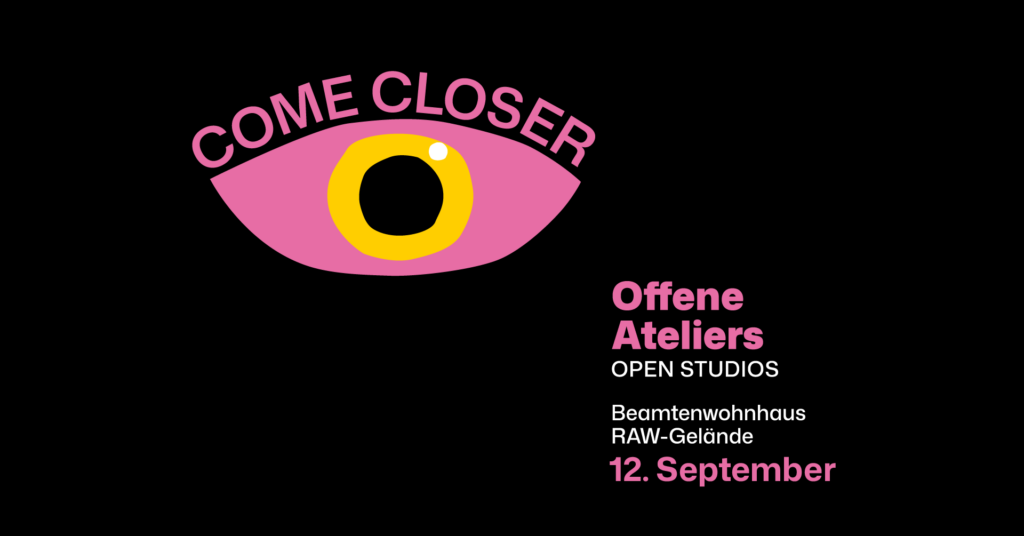
Offene Ateliers im BWH
12. September 2026
Liebe Freund*innen und Kunstinteressierte,
Gerne möchten wir Sie und euch herzlich zu unserem „Tag der offenen Ateliers“ ins Beamtenwohnhaus auf dem RAW-Gelände einladen:
Offene Ateliers im BWH
12. September 2026
14 – 22 Uhr
PROGRAMM:
14 – 18 Uhr: offene Ateliers, Siebdruck, Ausstellungen
17 Uhr: Walk’n Talk mit Cleo Wächter
Treffpunkt: Ausgabestelle im Erdgeschoss
18 Uhr: Konzert eines Duos der Berlin Cello Academy
Vernissage der Ausstellungen:
„Come Closer“ und „Thoughts in Passing“
Für das Leibliche Wohl ist gesorgt,
Wir freuen uns über Ihren/ Euren Besuch!
Beamtenwohnhaus (BWH)
Revaler Straße 99
(Eingang ggü. Revaler Str. 7)
10245 Berlin Friedrichshain
https://raw-skpz.de/bwh/
https://www.raw-kultur-l.de/
https://alexandrelevi.eu/
https://guidopalmadessa.com/
https://www.cleowaechter.com
https://berlincelloacademy.
Unsere Veranstaltung findet statt im Rahmen des Tages des offenen
Denkmals.
Dear friends and art lovers,
We’d like to cordially invite you to our Open Studios Day at the Beamtenwohnhaus on the RAW-Gelände:
Open Studios at the Beamtenwohnhaus, RAW-Gelände September 12, 2026, 2-10 pm
Program:
2pm – 6pm Open Studios, Screenprinting and exhibitions
5pm Walk ´n Talk mit Cleo Wächter,
Meeting point: Ausgabestelle in the ground floor
6pm Concert Berlin Cello Academy, Opening
„Come Closer“ and
„Thoughts in Passing“
Drinks and food will be provided!
We look forward to seeing you!
Beamtenwohnhaus (BWH)
Revaler Straße 99
(Entrance opposite Revaler Str. 7)
10245 Berlin Friedrichshain
https://raw-skpz.de/bwh/
https://www.raw-kultur-l.de/
https://alexandrelevi.eu/
https://guidopalmadessa.com/
https://www.cleowaechter.com
https://berlincelloacademy.
Our event is taking place as part of „Tag des offenen Denkmals“
Pressemitteilung
Kurth-Gruppe bedroht Clubs und die vielfältige Soziokultur auf dem RAW-Gelände
Pressemitteilung Bezirksamt
Friedrichshain-Kreuzberg Berlin
Nr. 193/2026 // Berlin, 15. Juni 2026
Kurth-Gruppe bedroht Clubs und die vielfältige Soziokultur auf dem RAW-Gelände-Bezirk und Senat fordern Weiterführung der Verhandlungen.
Pressemitteilung Bezirksamt
Friedrichshain-Kreuzberg von Berlin
Nr. 193/2026 // Berlin, 15. Juni 2026
Kurth-Gruppe bedroht Clubs und die vielfältige Soziokultur auf dem RAW-Gelände-Bezirk und Senat fordern Weiterführung der Verhandlungen
Die Kurth-Gruppe hat das Bebauungsplanverfahren RAW West einseitig für gescheitert erklärt und Räumungsaufforderungen ausgesprochen, obwohl ein Verhandlungsangebot von Senat und Bezirk auf dem Tisch liegt. Senat, Bezirksamt, BVV-Fraktionen und die Betreiber*innen der Angebote im Soziokulturellen L (SKL) reagieren mit Unverständnis und fordern die Kurth-Gruppe auf, an den Verhandlungstisch zurückzukehren, statt einen der wichtigsten Kulturstandorte Berlins zu zerschlagen.
Das Land Berlin wird erneut aktiv auf die Kurth-Gruppe zugehen und zu einem Klärungsversuch einladen.
Es liegt nun an der Kurth-Gruppe, das Gesprächsangebot zu nutzen.
Jens Schwan, Sprecher des Soziokulturellen L auf dem RAW erklärt: „Für die Nutzer*innen des SKL stellt der Abbruch des Bebauungsplanverfahrens eine existenzielle Bedrohung dar. Ein für ganz Berlin bedeutender Kulturstandort steht auf dem Spiel. In den letzten Wochen wurden einige Betreiber*innen bereits von der Kurth-Gruppe aufgefordert, ihre Räume zu verlassen. Für das betroffene Cassiopeia würde die Räumung zu Ende Juni die sofortige Insolvenz bedeuten. Wir stehen solidarisch zusammen.
Die Kurth-Gruppe muss das Angebot des Landes Berlin konstruktiv aufgreifen und gemeinsam mit dem Senat, dem Bezirk und den Nutzer*Innen eine Lösung zum Erhalt des gesamten SKL finden.“
Martin Pallgen, Sprecher der Senatsverwaltung für Stadtentwicklung, Bauen und Wohnen erklärt: „In enger Zusammenarbeit mit dem Bezirk hat das Land Berlin mit einer Stimme einen Vorschlag zur Umsetzung der Ziele der Kurth-Gruppe und zur Sicherung des Soziokulturellen L auf dem RAW-Gelände vorgelegt. Es bleibt unverständlich, warum die Eigentümerin das Gespräch darüber verweigert und nun ohne Rücksprache oder Diskussion das Verfahren einseitig abbricht. Das Land Berlin ist weiterhin zu Gesprächen und rechtlich vertretbarem Entgegenkommen bereit. Diese Bereitschaft muss aber auch angenommen werden.“
Florian Schmidt, Stadtrat für Bauen, Planen, Kooperative Stadtentwicklung: „Bezirk und Land haben seit über einem Jahr intensiv daran gearbeitet, die unterschiedlichen Interessen am Standort zusammenzuführen.
Pressestelle
Frankfurter Allee 35/37, 10247 Berlin
Telefon: (030) 90298 – 2843/-2418
E-Mail: presse@ba-fk.berlin.de
Ziel des Bezirksamtes war im Rahmen des Bebauungsplanverfahrens schon immer sowohl die langfristige Sicherung des Soziokulturellen L, als auch die Unterstützung der Entwicklungsziele des Vorhabenträgers im
Rahmen der rechtlichen Möglichkeiten.
Mit dem vorliegenden ahmenvertragsentwurf wurde ein konkreter und für die Kurth-Gruppe wirtschaftlich angemessener Vorschlag unterbreitet.
„Ich appelliere an die Firma Kurth, an den Verhandlungstisch zurückzukehren und den Entwurf mit dem Land
Berlin zu besprechen.“
Die Fraktionen der Grünen, Linken und SPD der BVV Friedrichshain-Kreuzberg erklären:
„Die Fraktionen der Grünen, Linken und SPD der Bezirksverordnetenversammlung (BVV) Friedrichshain-Kreuzberg werden sich auch weiterhin für den Erhalt des besonderen Charakters des RAW-Geländes und der Soziokultur einsetzen. Die wiederholte Gefährdung der bestehenden Miet- und Nutzungsverhältnisse belasten das Vertrauen in einen gemeinsamen ntwicklungsprozess erheblich.
Wir werden eine Sondersitzung des Ausschusses für Stadtentwicklung mit dem Senat und der Kurth-Gruppe einberufen, um Transparenz über den Stand der Verhandlungen und der Bedrohung der Soziokultur sowie der Clubs zu bekommen.
Wir werden den Bebauungsplan gegebenenfalls auch unter den geänderten Vorzeichen fortführen und alle planerischen Möglichkeiten ausschöpfen, um den soziokulturellen Charakter des Geländes weitgehend zu sichern und Entwicklungen zu verhindern, die den Interessen des Bezirks entgegenstehen. Wir geben das RAW nicht auf!“
Zum Hintergrund
Im Januar 2026 machte die Kurth-Gruppe unter Verweis auf die Möglichkeiten des sogenannten „Bauturbos“ eine vorgezogene Baugenehmigung für den Wohnungsbau zur Voraussetzung für die Fortführung des Verfahrens.
Die Senatsverwaltung für Stadtentwicklung, Bauen und Wohnen und das Bezirksamt legten daraufhin Mitte Mai einen Rahmenvertrag vor, der die zentralen Forderungen der Beteiligten aufgreift und einen rechtssicheren Weg zum Abschluss des begonnenen Bebauungsplanverfahrens sowie zur dauerhaften Sicherung des SKLs aufzeigt.
Mit einer vorgezogenen Baugenehmigung für den Wohnungsbau würden bereits vor Abschluss des
Bebauungsplanverfahrens erhebliche wirtschaftliche Vorteile für die Eigentümerseite entstehen. Aus Sicht des Landes Berlin ist es daher angemessen, diese vorgezogene Baurechtsgewährung mit einer langfristigen Sicherung des SKL zu verknüpfen.
Vorgesehen ist, das SKL für einen Zeitraum von 30 Jahren über einen Generalmietvertrag abzusichern. Zudem hat das Land Berlin angeboten, einen Zuschuss zu Investitionsmaßnahmen zu gewähren und, wie verabredet, bereits ein Schallgutachten beauftragt.
Auch nach einem umfassenden Erläuterungsschreiben der vom Land Berlin beauftragten Kanzlei blieb eine inhaltliche Auseinandersetzung mit dem Vertragsentwurf bislang aus. Parallel dazu wurden einzelne Nutzende des SKL von der Kurth-Gruppe zur Räumung aufgefordert, während anderen neue Vertragsangebote unterbreitet wurden. Die daraus resultierende Unsicherheit erschwert die gemeinsamen Bemühungen um eine tragfähige Lösung.
Google Transtlate:
Press Release District Office
Friedrichshain-Kreuzberg of Berlin
No. 193/2026 // Berlin, June 15, 2026
Kurth Group Threatens Clubs and the Diverse Sociocultural Scene on the RAW Site; District and Senate Demand Continued Negotiations
The Kurth Group has unilaterally declared the RAW West development plan process a failure and issued eviction notices, despite a negotiation offer from the Senate and the district being on the table. The Senate, the district office, the district assembly factions, and the operators of the programs at the Sociocultural Center L (SKL) react with incomprehension and call on the Kurth Group to return to the negotiating table instead of destroying one of Berlin’s most important cultural sites.
The State of Berlin will again actively reach out to the Kurth Group and invite them to an attempt at clarification.
It is now up to the Kurth Group to accept this offer of dialogue.
Jens Schwan, spokesperson for the Sociocultural Center L at RAW, explains: “For the users of the SKL (Sociocultural Center L), the cancellation of the zoning plan process represents an existential threat. A culturally significant venue for all of Berlin is at stake. In recent weeks, several operators have already been asked by the Kurth Group to vacate their premises. For Cassiopeia, the eviction at the end of June would mean immediate insolvency. We stand in solidarity.
The Kurth Group must constructively accept the offer from the State of Berlin and work together with the Senate, the district, and the users to find a solution to preserve the entire SKL.”
Martin Pallgen, spokesperson for the Senate Department for Urban Development, Construction and Housing, explains: “In close cooperation with the district, the State of Berlin has unanimously submitted a proposal for implementing the Kurth Group’s objectives and securing the socio-cultural center L on the RAW site. It remains incomprehensible why the owner is refusing to engage in dialogue and is now unilaterally terminating the process without consultation or discussion. The State of Berlin remains open to dialogue and legally justifiable compromises. However, this willingness must also be accepted.”
Florian Schmidt, City Councillor for Construction, Planning, and Cooperative Urban Development, adds: “The district and the state have been working intensively for over a year to reconcile the various interests at this location.”
Press Office
Frankfurter Allee 35/37, 10247 Berlin
Telephone: (030) 90298 – 2843/-2418
Email: presse@ba-fk.berlin.de
The district office’s goal in the zoning plan process has always been both the long-term preservation of the socio-cultural area and the support of the project developer’s development goals within the framework of legal possibilities.
The present draft framework agreement represents a concrete proposal that is economically appropriate for the Kurth Group.
„I appeal to the Kurth company to return to the negotiating table and discuss the draft with the State of Berlin.“
The Green, Left, and SPD parliamentary groups in the Friedrichshain-Kreuzberg District Assembly declare:
„The Green, Left, and SPD parliamentary groups in the Friedrichshain-Kreuzberg District Assembly will continue to advocate for the preservation of the unique character of the RAW site and its socio-cultural activities. The repeated threats to existing leases and usage agreements significantly undermine confidence in a collaborative development process.
We will convene a special meeting of the Committee for Urban Development with the Senate and the Kurth Group to gain transparency regarding the status of the negotiations and the threats to the socio-cultural activities and clubs.
We will continue with the development plan, even under the changed circumstances, and exhaust all planning options to largely safeguard the socio-cultural character of the site and prevent developments that run counter to the district’s interests. We will not give up on the RAW!“
Background
In January 2026, the Kurth Group, citing the possibilities of the so-called „construction accelerator,“ made an expedited building permit for residential construction a prerequisite for continuing the project.
In response, the Senate Department for Urban Development, Construction and Housing and the district office presented a framework agreement in mid-May that addresses the key demands of the parties involved and outlines a legally sound path to concluding the ongoing zoning plan process and securing the long-term future of the SKL (Social and Cultural Center).
An expedited building permit for residential construction would generate significant economic advantages for the owners even before the completion of the zoning plan process. From the perspective of the State of Berlin, it is therefore appropriate to link this expedited granting of building rights with the long-term safeguarding of the SKL.
The plan is to secure the SKL for a period of 30 years through a master lease agreement. Furthermore, the State of Berlin has offered to provide a subsidy for investment measures and, as agreed, has already commissioned a noise assessment.
The plan is to secure the SKL for a period of 30 years through a master lease agreement. In addition, the State of Berlin has offered to provide a subsidy for investment measures and, as agreed, has already commissioned a noise assessment.
… Even after a comprehensive explanatory letter from the law firm commissioned by the State of Berlin, a substantive discussion of the draft contract has yet to take place. At the same time, some SKL users have been asked to vacate by the Kurth Group, while others have been presented with new contract offers. The resulting uncertainty is hindering joint efforts to find a viable solution.
Powered By EmbedPress
Pressemitteilung
Berliner Kultur wird zu Tode gespart
Die Stiftung für Kulturelle Weiterbildung und Kulturberatung soll den Sparmaßnahmen zum Opfer fallen. Die Abwicklung dieser kritischen Infrastruktur käme Berlin teuer zu stehen.
Hier findet Ihr die Pressemitteilung.
The Foundation for Cultural Further Education and Cultural Consulting is set to fall victim to the austerity measures. The closure of this critical infrastructure would be very expensive for Berlin.
You can find the press release here.
Die Stiftung für Kulturelle Weiterbildung und Kulturberatung soll den Sparmaßnahmen zum Opfer fallen. Die Abwicklung dieser kritischen Infrastruktur käme Berlin teuer zu stehen.
Berlin, 20.11.2024. Im Berliner Haushalt müssen über 3 Milliarden Euro eingespart werden. Der Kulturbereich als kleinstes Ressort ist dabei unverhältnismäßig hart betroffen. In der am gestrigen Dienstag veröffentlichten Liste der Einsparmaßnahmen steht die öffentlich-rechtliche Stiftung für Kulturelle Weiterbildung und Kulturberatung (SKWK) auf dem Streichposten,
ebenfalls die ihr angegliederte Tochtergesellschaft, die Kulturraum Berlin gGmbH (KRB).
Neben massiven Einsparungen ist konkret von Abwicklung die Rede. Die SKWK ist in Berlin das Dach für fünf Initiativen, die damit ihre Arbeit von heute auf morgen einstellen müssen: Diversity Arts Culture (DAC), Institut für Kulturelle Teilhabeforschung (IKTf), kultur_formen, das servicezentrum musikschulen (szm) sowie die Kulturraum Berlin gGmbH (KRB). Die Abwicklung hätte für den Berliner Kulturbereich sowie bundesweit verheerende Auswirkungen:
Ohne Diversity Arts Culture findet im Kulturbereich keine Öffnung für die vielfältige Stadtgesellschaft statt. Künstler*innen und Kulturtätigen fehlt im Diskriminierungsfall die dringend benötigte Anlaufstelle. Ohne das Institut für Kulturelle Teilhabeforschung gibt es bundesweit keine fundierte Wissensbasis für Kultureinrichtungen, um sich gegenüber der Konkurrenz im breiten
Freizeitmarkt zu behaupten. In Kulturpolitik und Verwaltungen fehlen Daten und Fakten zur
Wirksamkeit von Kulturfördermaßnahmen.
Ohne kultur_formen verlieren jährlich über 200 Projekte der Kulturellen Bildung und künstlerische Projekte im gesamten Berliner Stadtraum ihre Förderung. Über 5.000 Kindern, Jugendlichen und jungen Erwachsenen wird damit ihre Chance auf Kulturelle Teilhabe verwehrt. Der Berliner Projektfonds Kulturelle Bildung, Berliner Projektfonds Urbane Praxis
und Kubinaut sind in ihrer Existenz bedroht. Ohne das servicezentrum musikschulen fehlt eine zentrale fachliche Stelle, die berlinweit den im Schulgesetz verankerten chancengleichen Zugang zu musikalischer Bildung im Blick hat und
die das organisatorische Rückgrat für alle bezirklichen Musikschulen bildet.
Ohne die Kulturraum Berlin gGmbH verlieren mehr als 2.500 Berliner Künstler*innen ihre Arbeitsräume, Großprojekte wie die Rettung der Uferhallen und das Kulturkataster stehen vor dem Aus.
“Ich bin schockiert, dass die Stiftung für Kulturelle Weiterbildung und Kulturberatung und die Kulturraum Berlin gGmbH abgewickelt werden sollen. Erst vor wenigen Monaten wurde ich vom Stiftungsratsvorsitzenden, dem Kultursenator Joe Chialo, zum Vorstand der Stiftung berufen. Gemäß der 10%-Sparvorgabe haben wir als Stiftung einen Vorschlag erarbeitet.
Die Medienmeldung, dass wir abgewickelt werden sollen, traf uns daher völlig überraschend und unerwartet. Knapp 100 hochqualifizierte Mitarbeitende sollen ihre Arbeitsplätze verlieren – und Berlin damit wichtige Infrastruktur, Expertise und Erfahrung in den für die Zukunftsfähigkeit des Kulturbereichs zentralen Themen Teilhabe, kulturelle Bildung und Diversität”, so Florian Stiehler, Vorstand der Stiftung. Seit 2019 hat die Stiftung für Kulturelle Weiterbildung und Kulturberatung mit ihren Bereichen dazu beigetragen, Teilhabe und kulturelle Bildung zu stärken sowie den Kulturbereich innovativ und effizient für die Zukunft aufzustellen. Über Jahre hat sie eine kritische Infrastruktur für den gesamten Kulturbetrieb aufgebaut und bereitgestellt. Dabei wurden maßgebliche Initiativen, Projekte und Services ins Leben gerufen wie eine spartenübergreifende Antidiskriminierungsberatung (Diversity Arts Culture), die niedrigschwellige Nachwuchsförderung “Durchstarten” (kultur_formen), “KulturMonitoring” (Institut für Kulturelle Teilhabeforschung), mit dem bundesweit vernetzt Kultur- und Freizeiteinrichtungen Besucher*innenforschung betreiben, und seit 2023 die berlinweite Steuerung von Prozessen für die Berliner Musikschulen wie der Support der Verwaltungssoftware MS-IT.
Wird die Stiftung abgewickelt, zerschlägt die Berliner Regierungskoalition diese vorher sorgfältig aufgebaute Infrastruktur, die in vielen Bereichen der Berliner Kulturverwaltung und in Kultureinrichtungen unter Aufwendung deutlich höherer Haushaltsmittel erneut aufgebaut werden müsste. Damit würde die Berliner Regierungskoalition dem Kulturbereich neben sämtlichen Mittelkürzungen der einzelnen Einrichtungen und Initiativen doppelt schaden – und
das auf lange Zeit. “Wir kämpfen dafür, dass die Abwicklung noch abgewendet werden kann und stehen für den Austausch mit politischen Entscheidungsträger*innen bereit”, so Florian Stiehler.
Translated with Google Transtlate:
The Foundation for Cultural Further Education and Cultural Advice is to fall victim to the austerity measures. The winding up of this critical infrastructure would be expensive for Berlin.
Berlin, November 20, 2024. Over 3 billion euros must be saved in the Berlin budget. The cultural sector, as the smallest department, is disproportionately hard hit. In the list of savings measures published yesterday, the public Foundation for Cultural Further Education and Cultural Advice (SKWK) is on the cut list,
as is its affiliated subsidiary, Kulturraum Berlin gGmbH (KRB).
In addition to massive savings, there is specific talk of winding up. The SKWK is the umbrella organization for five initiatives in Berlin, which will have to stop their work from one day to the next: Diversity Arts Culture (DAC), Institute for Cultural Participation Research (IKTf), kultur_formen, the service center for music schools (szm) and Kulturraum Berlin gGmbH (KRB). The liquidation would have devastating consequences for Berlin’s cultural sector and nationwide:
Without Diversity Arts Culture, the cultural sector will not be open to the diverse urban society. Artists and cultural workers lack the urgently needed contact point in the event of discrimination. Without the Institute for Cultural Participation Research, there is no sound knowledge base for cultural institutions nationwide to assert themselves against the competition in the broad leisure market. In cultural policy and administration, data and facts on the effectiveness of cultural funding measures are lacking.
Without kultur_formen, over 200 cultural education projects and artistic projects across the entire Berlin urban area lose their funding every year. Over 5,000 children, adolescents and young adults are thus denied their chance of cultural participation. The existence of the Berlin Project Fund for Cultural Education, the Berlin Project Fund for Urban Practice
and Kubinaut are threatened. Without the music school service center, there is no central, specialist office that keeps an eye on equal access to musical education throughout Berlin, as enshrined in the school law, and
that forms the organizational backbone for all district music schools.
Without Kulturraum Berlin gGmbH, more than 2,500 Berlin artists will lose their work spaces, and major projects such as saving the Uferhallen and the cultural register are on the verge of collapse.
“I am shocked that the Foundation for Cultural Further Education and Cultural Advice and Kulturraum Berlin gGmbH are to be wound up. Only a few months ago, I was appointed to the board of the foundation by the chairman of the foundation board, Senator for Culture Joe Chialo. In accordance with the 10% savings target, we as a foundation have drawn up a proposal.
The media report that we are to be wound up came as a complete surprise and unexpected to us. Almost 100 highly qualified employees are to lose their jobs – and Berlin will lose important infrastructure, expertise and experience in the key issues of participation, cultural education and diversity that are key to the future viability of the cultural sector,“ says Florian Stiehler, board member of the foundation. Since 2019, the Foundation for Cultural Further Education and Cultural Consulting has contributed to strengthening participation and cultural education and to preparing the cultural sector for the future in an innovative and efficient way. Over the years, it has built up and provided a critical infrastructure for the entire cultural sector. In the process, important initiatives, projects and services have been launched, such as cross-sector anti-discrimination advice (Diversity Arts Culture), the low-threshold support for young talent „Durchstarten“ (kultur_formen), „KulturMonitoring“ (Institute for Cultural Participation Research), with which cultural and leisure facilities networked nationwide conduct visitor research, and since 2023 the Berlin-wide management of processes for Berlin’s music schools, such as support for the MS-IT administration software.
If the foundation is wound up, the Berlin coalition government will destroy this previously carefully constructed infrastructure, which would have to be rebuilt in many areas of Berlin’s cultural administration and in cultural institutions at a significantly higher budget. In addition to all the funding cuts for individual institutions and initiatives, the Berlin coalition government would thus doubly damage the cultural sector – and for a long time to come. „We are fighting to prevent the winding up and are ready to exchange ideas with political decision-makers,“ says Florian Stiehler.
Die Stiftung für Kulturelle Weiterbildung und Kulturberatung soll den Sparmaßnahmen zum Opfer fallen. Die Abwicklung dieser kritischen Infrastruktur käme Berlin teuer zu stehen.
Hier findet Ihr die Pressemitteilung.
The Foundation for Cultural Further Education and Cultural Consulting is set to fall victim to the austerity measures. The closure of this critical infrastructure would be very expensive for Berlin.
You can find the press release here.
Die Stiftung für Kulturelle Weiterbildung und Kulturberatung soll den Sparmaßnahmen zum Opfer fallen. Die Abwicklung dieser kritischen Infrastruktur käme Berlin teuer zu stehen.
Berlin, 20.11.2024. Im Berliner Haushalt müssen über 3 Milliarden Euro eingespart werden. Der Kulturbereich als kleinstes Ressort ist dabei unverhältnismäßig hart betroffen. In der am gestrigen Dienstag veröffentlichten Liste der Einsparmaßnahmen steht die öffentlich-rechtliche Stiftung für Kulturelle Weiterbildung und Kulturberatung (SKWK) auf dem Streichposten,
ebenfalls die ihr angegliederte Tochtergesellschaft, die Kulturraum Berlin gGmbH (KRB).
Neben massiven Einsparungen ist konkret von Abwicklung die Rede. Die SKWK ist in Berlin das Dach für fünf Initiativen, die damit ihre Arbeit von heute auf morgen einstellen müssen: Diversity Arts Culture (DAC), Institut für Kulturelle Teilhabeforschung (IKTf), kultur_formen, das servicezentrum musikschulen (szm) sowie die Kulturraum Berlin gGmbH (KRB). Die Abwicklung hätte für den Berliner Kulturbereich sowie bundesweit verheerende Auswirkungen:
Ohne Diversity Arts Culture findet im Kulturbereich keine Öffnung für die vielfältige Stadtgesellschaft statt. Künstler*innen und Kulturtätigen fehlt im Diskriminierungsfall die dringend benötigte Anlaufstelle. Ohne das Institut für Kulturelle Teilhabeforschung gibt es bundesweit keine fundierte Wissensbasis für Kultureinrichtungen, um sich gegenüber der Konkurrenz im breiten
Freizeitmarkt zu behaupten. In Kulturpolitik und Verwaltungen fehlen Daten und Fakten zur
Wirksamkeit von Kulturfördermaßnahmen.
Ohne kultur_formen verlieren jährlich über 200 Projekte der Kulturellen Bildung und künstlerische Projekte im gesamten Berliner Stadtraum ihre Förderung. Über 5.000 Kindern, Jugendlichen und jungen Erwachsenen wird damit ihre Chance auf Kulturelle Teilhabe verwehrt. Der Berliner Projektfonds Kulturelle Bildung, Berliner Projektfonds Urbane Praxis
und Kubinaut sind in ihrer Existenz bedroht. Ohne das servicezentrum musikschulen fehlt eine zentrale fachliche Stelle, die berlinweit den im Schulgesetz verankerten chancengleichen Zugang zu musikalischer Bildung im Blick hat und
die das organisatorische Rückgrat für alle bezirklichen Musikschulen bildet.
Ohne die Kulturraum Berlin gGmbH verlieren mehr als 2.500 Berliner Künstler*innen ihre Arbeitsräume, Großprojekte wie die Rettung der Uferhallen und das Kulturkataster stehen vor dem Aus.
“Ich bin schockiert, dass die Stiftung für Kulturelle Weiterbildung und Kulturberatung und die Kulturraum Berlin gGmbH abgewickelt werden sollen. Erst vor wenigen Monaten wurde ich vom Stiftungsratsvorsitzenden, dem Kultursenator Joe Chialo, zum Vorstand der Stiftung berufen. Gemäß der 10%-Sparvorgabe haben wir als Stiftung einen Vorschlag erarbeitet.
Die Medienmeldung, dass wir abgewickelt werden sollen, traf uns daher völlig überraschend und unerwartet. Knapp 100 hochqualifizierte Mitarbeitende sollen ihre Arbeitsplätze verlieren – und Berlin damit wichtige Infrastruktur, Expertise und Erfahrung in den für die Zukunftsfähigkeit des Kulturbereichs zentralen Themen Teilhabe, kulturelle Bildung und Diversität”, so Florian Stiehler, Vorstand der Stiftung. Seit 2019 hat die Stiftung für Kulturelle Weiterbildung und Kulturberatung mit ihren Bereichen dazu beigetragen, Teilhabe und kulturelle Bildung zu stärken sowie den Kulturbereich innovativ und effizient für die Zukunft aufzustellen. Über Jahre hat sie eine kritische Infrastruktur für den gesamten Kulturbetrieb aufgebaut und bereitgestellt. Dabei wurden maßgebliche Initiativen, Projekte und Services ins Leben gerufen wie eine spartenübergreifende Antidiskriminierungsberatung (Diversity Arts Culture), die niedrigschwellige Nachwuchsförderung “Durchstarten” (kultur_formen), “KulturMonitoring” (Institut für Kulturelle Teilhabeforschung), mit dem bundesweit vernetzt Kultur- und Freizeiteinrichtungen Besucher*innenforschung betreiben, und seit 2023 die berlinweite Steuerung von Prozessen für die Berliner Musikschulen wie der Support der Verwaltungssoftware MS-IT.
Wird die Stiftung abgewickelt, zerschlägt die Berliner Regierungskoalition diese vorher sorgfältig aufgebaute Infrastruktur, die in vielen Bereichen der Berliner Kulturverwaltung und in Kultureinrichtungen unter Aufwendung deutlich höherer Haushaltsmittel erneut aufgebaut werden müsste. Damit würde die Berliner Regierungskoalition dem Kulturbereich neben sämtlichen Mittelkürzungen der einzelnen Einrichtungen und Initiativen doppelt schaden – und
das auf lange Zeit. “Wir kämpfen dafür, dass die Abwicklung noch abgewendet werden kann und stehen für den Austausch mit politischen Entscheidungsträger*innen bereit”, so Florian Stiehler.
Translated with Google Transtlate:
The Foundation for Cultural Further Education and Cultural Advice is to fall victim to the austerity measures. The winding up of this critical infrastructure would be expensive for Berlin.
Berlin, November 20, 2024. Over 3 billion euros must be saved in the Berlin budget. The cultural sector, as the smallest department, is disproportionately hard hit. In the list of savings measures published yesterday, the public Foundation for Cultural Further Education and Cultural Advice (SKWK) is on the cut list,
as is its affiliated subsidiary, Kulturraum Berlin gGmbH (KRB).
In addition to massive savings, there is specific talk of winding up. The SKWK is the umbrella organization for five initiatives in Berlin, which will have to stop their work from one day to the next: Diversity Arts Culture (DAC), Institute for Cultural Participation Research (IKTf), kultur_formen, the service center for music schools (szm) and Kulturraum Berlin gGmbH (KRB). The liquidation would have devastating consequences for Berlin’s cultural sector and nationwide:
Without Diversity Arts Culture, the cultural sector will not be open to the diverse urban society. Artists and cultural workers lack the urgently needed contact point in the event of discrimination. Without the Institute for Cultural Participation Research, there is no sound knowledge base for cultural institutions nationwide to assert themselves against the competition in the broad leisure market. In cultural policy and administration, data and facts on the effectiveness of cultural funding measures are lacking.
Without kultur_formen, over 200 cultural education projects and artistic projects across the entire Berlin urban area lose their funding every year. Over 5,000 children, adolescents and young adults are thus denied their chance of cultural participation. The existence of the Berlin Project Fund for Cultural Education, the Berlin Project Fund for Urban Practice
and Kubinaut are threatened. Without the music school service center, there is no central, specialist office that keeps an eye on equal access to musical education throughout Berlin, as enshrined in the school law, and
that forms the organizational backbone for all district music schools.
Without Kulturraum Berlin gGmbH, more than 2,500 Berlin artists will lose their work spaces, and major projects such as saving the Uferhallen and the cultural register are on the verge of collapse.
“I am shocked that the Foundation for Cultural Further Education and Cultural Advice and Kulturraum Berlin gGmbH are to be wound up. Only a few months ago, I was appointed to the board of the foundation by the chairman of the foundation board, Senator for Culture Joe Chialo. In accordance with the 10% savings target, we as a foundation have drawn up a proposal.
The media report that we are to be wound up came as a complete surprise and unexpected to us. Almost 100 highly qualified employees are to lose their jobs – and Berlin will lose important infrastructure, expertise and experience in the key issues of participation, cultural education and diversity that are key to the future viability of the cultural sector,“ says Florian Stiehler, board member of the foundation. Since 2019, the Foundation for Cultural Further Education and Cultural Consulting has contributed to strengthening participation and cultural education and to preparing the cultural sector for the future in an innovative and efficient way. Over the years, it has built up and provided a critical infrastructure for the entire cultural sector. In the process, important initiatives, projects and services have been launched, such as cross-sector anti-discrimination advice (Diversity Arts Culture), the low-threshold support for young talent „Durchstarten“ (kultur_formen), „KulturMonitoring“ (Institute for Cultural Participation Research), with which cultural and leisure facilities networked nationwide conduct visitor research, and since 2023 the Berlin-wide management of processes for Berlin’s music schools, such as support for the MS-IT administration software.
If the foundation is wound up, the Berlin coalition government will destroy this previously carefully constructed infrastructure, which would have to be rebuilt in many areas of Berlin’s cultural administration and in cultural institutions at a significantly higher budget. In addition to all the funding cuts for individual institutions and initiatives, the Berlin coalition government would thus doubly damage the cultural sector – and for a long time to come. „We are fighting to prevent the winding up and are ready to exchange ideas with political decision-makers,“ says Florian Stiehler.
Powered By EmbedPress
DIE 3 HÄUSER
Die drei Häuser gehören zur erhaltenen denkmalgeschützten Gebäudestruktur des ehemaligen Reichsbahnausbesserungswerkes Ost (ab 1967: „Franz Stenzer“). Die ursprüngliche Gebäudestruktur wurde durch eine Verschränkung von künstlerischen, kulturellen und sozialen Angeboten für Nutzer*innen und Anwohner*innen resozialisiert.
BWH
BEAMTENWOHNHAUS NUTZUNGSTYPOLOGIE
Bildene Kunst, Angewandte Kunst, Soziales, Kultur, Politik, Medien
mehr lesen
VWG
VERWALTUNGSGEBÄUDE NUTZUNGSTYPOLOGIE
Bildene Kunst, Angewandte Kunst, Darstellende Kunst, Soziales, Kultur, Politik, Medien
mehr lesen
SGL
STOFF- U. GERÄTELAGER NUTZUNGSTYPOLOGIE
Musik, Angewandte Kunst, Zirkus und Bewegungskünste, Soziales, Kultur, Politik, Medien
mehr lesen

ÜBER UNS
Das 1999 gegründete soziokulturelle Zentrum in den denkmalgeschützten Häusern des ehemaligen Reichsbahnausbesserungswerkes Franz Stenzer (heute RAW-Gelände genannt) wurde bis Ende 2013 vom RAW-Tempel e.V. verwaltet und durch dessen Mitglieder, Projekte/Mieter*innen, Nutzer*innen und Mitarbeiter*innen gestaltet und aufgebaut.


